
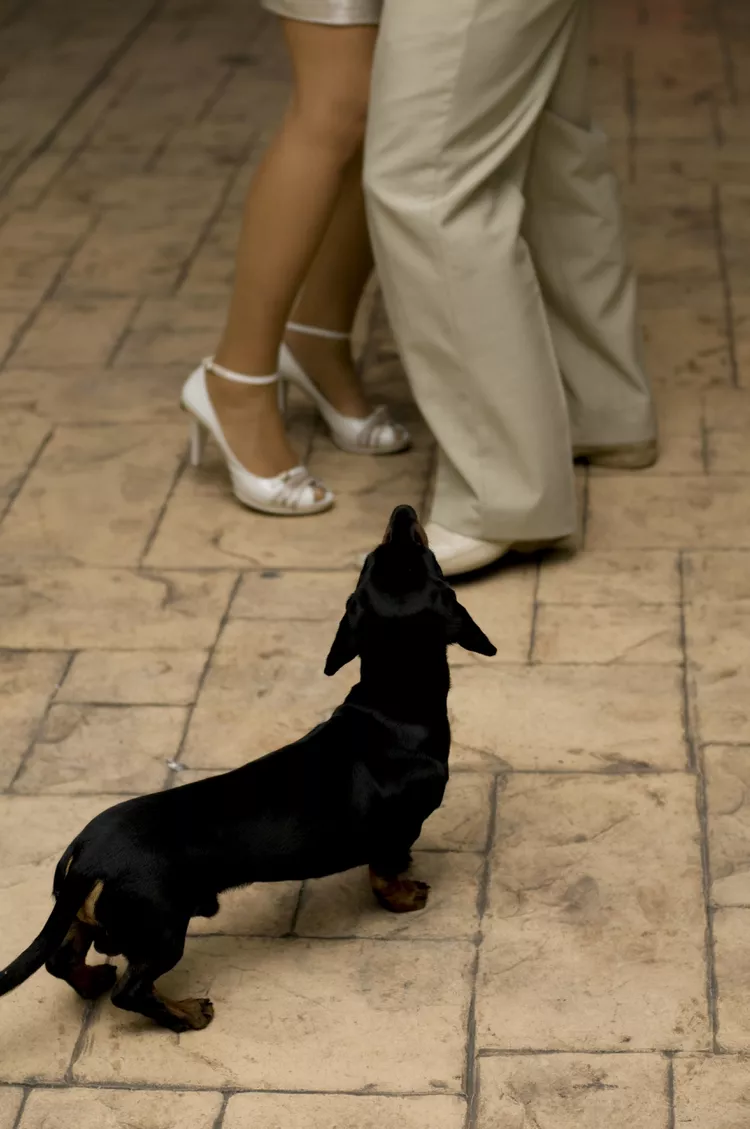
Signs of jealousy can occur in dogs in many different situations. They may arise between dogs in multi-dog households or when your pup has a visiting doggy friend. You may also notice these signs directed towards people when a new human is in your household, or maybe even after the arrival of a baby.
While we may call it jealousy, the proper term in dogs is really "resource guarding" or anxiety centered around environmental objects. This resource guarding can lead to interdog aggression when it occurs between dogs and aggression and/or anxiety when it is directed towards people or other areas of the environment.
The ways dog express this can vary a lot too, but most owners recognize it right away because it just seems so relatable. A new dog comes to visit and suddenly your 60-pound pooch is perched on your lap, growling if this new dog comes too close, or even marking with urine when it never did this before.
Why Do Dogs Show Signs of Jealousy?
The behaviors we observe are usually a dog’s response to feeling anxious over a "scarce" resource or reacting to a new situation that may feel scary. This commonly shows up as aggression during meal time or fighting over toys seen as limited by the pups. They show signs of aggression like growling, barking, staring, when they are anxious about potentially losing the resource.
A similar response can occur when the primary caregiver is seen as the "scarce resource" and a dog feels like their time and attention with their favorite person is threatened by the presence of another dog or person. Finally, a new dog or person may also bring novel experiences, sounds, or smells and changes to your dog’s routine that feel scary and unpredictable, leading to increased anxiety in your pup.
Signs of Anxiety in Dogs
Since we have properly identified the problem as anxiety and not jealousy, what are the common signs of anxiety in dogs? Signs of anxiety may crop up as different behaviors for different pups depending on the circumstances and whether they are directing their behaviors towards another dog versus a person. Some of the common signs include:
- Staring at the other dog or person for long periods of time
- Growling, baring teeth, or biting at the other dog/person
- Physically standing in between the owner or special object and the other dog/person
- Pushing, touching, or jumping on the owner more often in the presence of the other dog/person
- Urinating on objects or in places that the dog wants to "claim"
How to Help Decrease Anxious Behavior
It is best to work with a reputable dog trainer and your veterinarian to help personalize a plan to your dogs’ specific needs, as cases of interdog aggression require a different set of tools than when these behaviors are directed towards a person. In general, most approaches will involve providing a structured routine and teaching your pup(s) specific commands, as well as keeping the dog(s) separated at certain times for safety while they adjust to a new situation. Your veterinarian may also recommend the use of anti-anxiety supplements or medications. This is an important piece of the puzzle since these behaviors are most often rooted in anxiety around resources. Without addressing the underlying anxiety, training is often not as successful as we would hope.
Separate Your Dog From the Stressor
It is especially important to separate them at times that tend to lead to high arousal and conflicts such as when food, treats, or toys are present. If the problem is interdog aggression, the dogs should be separated from each other for feedings and should be carefully supervised around toys. Ideally two identical toys should be available to eliminate the need for competition but if they are still showing signs of aggression such as prolonged staring, growling, or fighting, they should be separated when playing with toys as well.
Give Your Dog a Safe Space
Providing your dog with their own safe space, such as a crate, is also important. This gives each dog a sense of security and a place where they can enjoy toys and treats in peace. The crate should always be used as a positive reward, meaning dogs should not be locked in as a punishment, but rather encouraged to go there with treats and toys in order to create a happy association with the space. In fact, it is often recommended to feed dogs in their own crates to avoid the feelings of anxiety and fear that can come with eating close to a possible "competitor." This is one of the most basic strategies to use when food seems to be the resource that a dog is guarding.
Train Your Dog With Commands
It is also helpful to train the dogs to respond to a set of commands to help guide how they behave around each other, as well as with you and other people. This includes commands such as sit, stay, and go to your spot, which can be used to bring order to situations that may otherwise lead to anxiety or fighting. They should always be asked to follow the same set of commands before food, treats, or toys are offered to reinforce the commands and provide consistent expectations.
Many of these same techniques will also work when a dog is adjusting to a new person. Consistent routines, exercise, and training commands will help your dog to know what is expected and give your dog a sense of security and predictability in their day. Some situations will require additional specialized techniques, such as introducing a new baby.
Consult a Professional
In more extreme cases, or when signs of aggression persist, it is very important to work with your veterinarian and a trainer using positive reinforcement techniques to prevent dogs or people from potential injury or unsafe situations. Some techniques used to provide additional safety include training dogs to wear basket muzzles using positive reinforcement and walking dogs separately or with one person walking each dog.
Final Thoughts
It is always best to prevent escalations in aggression by keeping dogs separated whenever they are unsupervised. Dogs should never be left alone with young children or people they have been reactive towards in the past. With consistency and positive reinforcement, many dogs will learn to cohabitate with each other and with new human family members, enriching their lives and those of their families.