
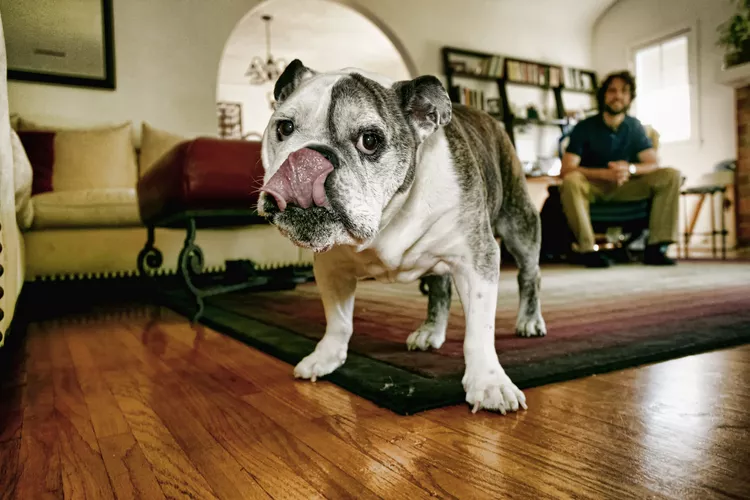
Dog licking can be a normal behavior—some dogs will frequently lick themselves, their owners, and even their toys. When a dog licks furniture, it is typically the softer items in the home, such as couches, chairs, bedding, and carpet. It might be harmless or it can be a nuisance, so why do dogs lick furniture anyway? The most common reasons for this behavior involve stress and anxiety, though there can be other causes as well.
5 Reasons Dogs Lick Furniture
Boredom
A dog may lick furniture because they are bored. Dogs, especially younger dogs, have a lot of energy. Oftentimes during the day, when owners are away at work, dogs will have pent-up energy that they do not know what to do with. With no one home to play with them, many dogs will expend energy by licking objects they typically wouldn't lick. In most cases, this is not a serious behavior problem, but if left unaddressed the licking can escalate to destruction of objects. Increasing mental stimulation with food puzzles, long walks, and short training sessions may be a great way to prevent boredom.
Stress
Stress in a dog can manifest itself through a dog licking furniture or other objects inappropriately. In these cases, it is typically a short-lived and transient stressor such as a move, a new person or pet in the home, bad weather, an owner leaving the home, or other animals outside of the house. Licking the furniture is a sign that your dog is stressed by these events. Consider increased exercise, anti-anxiety supplements or medications, environmental changes (like noise machines during storms), and other ways to decrease situational stresses when licking is noted.
Anxiety
Anxiety is common in dogs and involves more long-term stress. The same issues that can cause transient stress may also result in anxiety, but in these cases, the dog does not successfully acclimate. Many dogs suffer regular bouts of anxiety when their owners leave the home. These dogs may self-soothe by licking furniture or other objects in the house. Left untreated, this can become pathological and a very hard behavior to correct.
Separation anxiety is a well-recognized condition in veterinary medicine and if left untreated can become dangerous to your pet and often destructive to your home. To prevent escalation of separation anxiety, talk to your veterinarian. They will be able to assist in recommending medications or techniques that will be helpful in your specific situation.
Obsessive Compulsive Disorder
In more severe cases, some dogs suffer from a true mental disorder such as obsessive compulsive disorder. These dogs tend to lick furniture and other objects, not only when they are left alone, but also in the presence of humans and their owners. These dogs have an undeniable compulsion to lick things and cannot be easily dissuaded. If this describes your dog, veterinary intervention is warranted.
Medical Causes
Sometimes, a dog that suddenly begins to lick the furniture may be suffering from a medical condition. These disorders include pain, canine cognitive dysfunction, and gastrointestinal distress or upset. If your dog begins to exhibit any abnormal behavior, it is imperative that they are seen by their veterinarian as soon as possible.
What Objects Do Dogs Typically Lick?
In general, dogs tend to lick softer objects and also those that are easily accessible. Bedding, blankets, and towels that the dog regularly lies on are common targets. Other home furnishings that are commonly licked include couches, chairs, bedding, and carpet.
Are Some Dogs More Likely to Lick Furniture?
There is no way to predict which dogs will lick furniture. There is no breed, gender, or age predisposition. However, personality does play a role, and dogs that are more anxious in general are more likely to be affected. Dogs who are left alone for long periods of time, crated for extended periods, and those that are not regularly interacted with are also often furniture lickers.
How to Stop Dogs Licking Furniture
The first step to combating this behavior with your dog is to attempt to determine the cause. This determination will enable you to implement strategies that can help your dog and your furniture.
If you suspect boredom as the cause, it can help tremendously to spend more time with the dog, Take them out for walks and add exercise when medically possible. During times that the dog must spend at home alone, leave on the lights, play a radio or TV, and make sure they have plenty of appropriate toys. Many dogs are kept busy and challenged by puzzle toys. Others may prefer chew
toys.
Controlling stress as much as possible can also benefit your dog. Though some things that may stress your dog are unavoidable, keeping stressors to a minimum may help. You can also try to shelter or distract the dog from stressful situations.
As mentioned before, if you have any concerns about a possible medical condition, you should make an appointment for your dog with their veterinarian as soon as possible. Controlling the medical issue will also control the licking behavior.
Your veterinarian is also your best resource for diagnosing and treating anxiety disorders as well as possible obsessive compulsive disorder. Your veterinarian will rule out medical issues and can help alleviate mental issues with training, environmental enrichment, and medications. They can also recommend certified trainers who can help alleviate the behavior.