
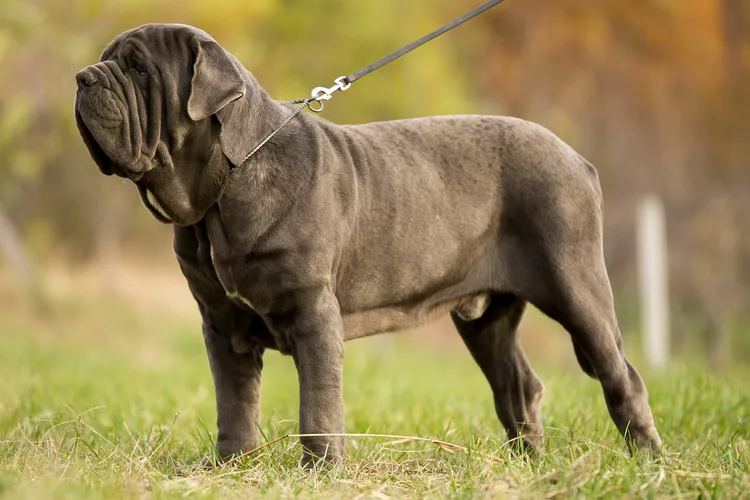
The Neapolitan mastiff is a giant working breed from Italy with wrinkly skin, short fur, a muscular build, and long, floppy jowls that droop from their face. Though their size can be intimidating, the Neapolitan mastiff is a gentle giant that makes an excellent large family dog.
These dogs are just as protective as they are loving toward their owners, and they are also low-maintenance and easygoing companions. If you're looking for a best friend that can also help keep you safe, the Neapolitan mastiff is up for the job.
Learn all about the history, characteristics, and needs of the Neapolitan mastiff.
Breed Overview
Group: Working
Height: 24 to 31 inches
Weight: 110 to 150 pounds
Coat: Short, shiny fur
Coat Color: Black, blue, mahogany, tawny, or brindle
Life Span: 7 to 9 years
Temperament: Protective, stubborn, fearless, companionable, loyal
Hypoallergenic: No
Origin: Italy
Characteristics of the Neapolitan Mastiff
Along with its unique appearance, this breed makes a great companion. Neapolitan mastiffs love their families unconditionally, but they can be wary of strangers, making them great guard dogs to protect their homes from intruders. Their fearless and protective attitude is sure to frighten any unwanted visitors.
When it comes to spending time with their owners, Neapolitan mastiffs have especially affectionate personalities. They're not usually a playful breed, but your mastiff will be happy to curl up inside or go for a walk a few times each day.
History of the Neapolitan Mastiff
Tales and images of the Neapolitan mastiff date back as early as 700 B.C., according to the AKC. In fact, Alexander the Great is credited for their great reverence and good looks. In the fourth century B.C., he crossed his famous giant war dogs with short-haired Indian dogs to create a breed known as the molossus, which he used in battle.
The Romans took note and later adopted the molossus breed for their own use in combat and hunting. They eventually crossed these dogs with other large breeds to create an even larger and more intimidating canine: the mastino. The dog’s loose skin on the face served as a form of protection during hunts and fights.
The mastino was selectively bred by farmers in southern Italy to develop a breed large in size with loose, saggy skin and a smooth coat. In their selective breeding, they also aimed to develop a dog that was more family-friendly than the mastino, while still being a top-notch guard dog and protector. This breed became known as the Neapolitan mastiff, named after its origin city of Naples.
The Neapolitan mastiff soon became a national treasure in Italy, and six of them were reportedly shown in the first dog show in Naples in 1946. Italian painter Piero Scanziani drafted the breed standard in 1948, then the Italian Kennel Club officially recognized the breed the following year.
The breed spread throughout Europe in the 1970s and soon made its way to America. The United States Neapolitan Mastiff Club became the primary register for the breed in the 1990s. In 2004, the American Kennel Club officially accepted the Neapolitan mastiff into the Working Group.

Neapolitan Mastiff Care
Neapolitan mastiffs are known for their laid-back temperament and short, wrinkly coats. Your mastiff will require less exercise than other working breeds. However, these dogs still require plenty of training and grooming care to be healthy, well-mannered companions at home.
Exercise
While Neapolitan mastiffs can be couch potatoes, owners should still ensure they're active for about 20 minutes at least twice daily. They do not require a lot of exercise, but regular walks are crucial for managing weight and joint health.
As puppies, this giant breed is a different story. Neapolitan mastiff puppies are generally energetic and playful, but it is up to their owners to know when enough is enough. Because their bones are so big, joints can be easily damaged.
It's important to limit your puppy’s running and jumping activity while ensuring they do not climb up stairs too quickly. Keep an eye on them—especially in warm weather, as they are prone to overheating—and stop play before your pup gets too tired.

Grooming
Enormous, muscular, and wrinkly, the Neapolitan mastiff seems like a challenge to keep clean. Basic grooming like weekly brushings will help keep their coat clean and manage shedding. With regular brushing, you can keep baths on an as-needed basis. Just make sure to wipe their wrinkles down daily, then dry them completely to remove any dirt or other unwanted debris.
Regular nail trimming, ear cleaning, and teeth brushing will also enhance your Neapolitan mastiff's overall health and wellbeing. Because of their droopy jowls that are prone to drooling, many owners keep a slobber rag handy.
Training
Training your Neapolitan mastiff should begin as soon as possible, preferably during puppyhood at about 8 weeks of age. As they get older, individuals can become stubborn and difficult to train, so it is important to get on top of things at an early age. Also, training early is important to prevent bad habits like jumping on furniture or people when they are older and much bigger and heavier.
Because they are wary of strangers and naturally suspicious of outsiders, socialization training is key for Neapolitan mastiffs. Take your dog to public spaces on a regular basis. At home, help them learn how to welcome guests appropriately and distinguish between friend and foe.
Neapolitan mastiffs are not responsive to punishment. Instead, they respond well to positive reinforcement with affection and treats to reward good behavior. The same is true during grooming—treat them with love if they resist bath time.
Common Health Problems
Like other purebred dogs, Neapolitan mastiffs are prone to a few inherited health problems.
The following are common conditions associated with Neapolitan mastiffs:
- Hip and elbow dysplasia: These conditions are caused by a malformation in your dog's hip or elbow joints as they age, leading to weakness and pain.
- Arthritis: Characterized by a breakdown of the cartilage in your dog's joints, this condition can affect several different areas of the body. Joint health is a concern due to this breed’s large size. With all of their extra skin and hardy muscles, their joints are carrying a lot of weight. Ask your veterinarian for a hip and elbow evaluation along with preventative care tips.
- Gastric dilatation-volvulus (GDV or bloat): Bloat occurs when gases build up inside your dog's stomach and cause it to twist. This condition can be fatal, and veterinarians often recommend preventative surgery to tack the stomach down for giant breeds.
- Skin issues: The skin folds on the Neapolitan mastiff can make them susceptible to problems like lip-fold pyoderma, skin fold dermatitis, skin irritation, allergies, and infections.
- Dilated cardiomyopathy (DCM): This condition causes the heart to become larger than it should be, thereby affecting its ability to pump blood.
- Cherry eye: This occurs when the third eyelid becomes prolapsed. You’ll see a bulge in the eye that’s pink or red, your dog might not be able to close their eye, and they might paw at their eye.
- Demodectic mange: This problem develops when there are too many demodex mites in a dog’s hair follicles. Symptoms include hair loss that can range from mild to severe.
Diet and Nutrition
Feed your Neapolitan mastiff high-quality dog food and provide plenty of fresh water at all times. These large dogs might eat 7 cups of food per day, divided into at least two meals. Because of their large size, it's best to feed these dogs several small portions of food per day rather than one large meal to help prevent bloat.
Avoid foods with lots of fillers like animal by-products and pulp that lack essential nutrients. Natural, whole ingredients are best for your dog’s digestive system. Ask your veterinarian to help you determine the best food and portion sizes based on your specific dog's age, weight, and activity level.
According to the American Kennel Club, "experienced Neapolitan mastiff breeders recommend food that is slightly higher in fat and lower in protein," particularly for younger dogs who grow rapidly. Discuss any diet and nutritional concerns with your veterinarian.
Where to Adopt or Buy a Neapolitan Mastiff
Along with costly procedures like tacking your dog's stomach down to increase their chances of a healthy life, the price for Neapolitan mastiff puppies can be high—from about $2,500 to $5,000, or possibly more depending on pedigree and availability. Potential owners should consider the requirements of providing this breed with proper care.
It's not likely for prospective adopters to find Neapolitan mastiffs in shelters, but your local shelter may have similar breeds available for adoption. Breed-specific rescues are also a great place to start your search if you're certain that the Neapolitan mastiff is the right match for your home. Your local shelter may be able to refer you to these regional resources.
When adopting a puppy from a breeder, it's essential to do your research. Responsible breeders will provide all relevant medical tests for the litter's family. The breeder of your choice should also allow you to meet the litter's parents and see the conditions in which their dogs are kept. They should also test parent dogs for issues before breeding, and your puppy's medical history should be provided.
Resources like the national breed club and the AKC can help you start your search:
- Unites States Neapolitan Mastiff Club (USNMC)
- USNMC Breeder Referral
- AKC Neapolitan Mastiff Breeders
Neapolitan Mastiff Overview
The Neapolitan mastiff is a big dog with loads of love to give. This dog will protect you and be your loyal companion. However, they require adequate training and socialization, along with plenty of food every day to keep them energized. They also need to be groomed regularly to keep their skin and coat healthy.
Pros of Neapolitan Mastiffs
- Loyal, protective guard dog
- Mellow and gentle with family
- Does not require much exercise
Cons of Neapolitan Mastiffs
- Prone to joint disease due to large size
- May become stubborn and difficult to train with age
- Wrinkles need regular cleaning of dirt and debris

More Dog Breeds and Further Research
If you love the Neapolitan mastiff, you might also like these similar breeds:
There are plenty of different dog breeds that can be your next best friend. With a little research, you can find the best match to bring home!
-
Is a Neapolitan mastiff aggressive?
While the Neapolitan mastiff is especially loving toward their family, this breed is known for being protective. Your dog may become aggressive with strangers and other pets if not socialized properly and consistently throughout their life.
-
Is a Neapolitan mastiff a good family dog?
Neapolitan mastiffs love spending time with their families, and they are very affectionate with both kids and their adult owners. Training your dog should begin at an early age to ensure this giant breed is well-mannered at home.
-
What is the difference between a bullmastiff and a Neapolitan mastiff?
Bullmastiffs are typically smaller, more active, and friendlier with strangers than Neapolitan mastiffs. The bullmastiff was originally bred as a mix between the English mastiff and the Old English bulldog.